
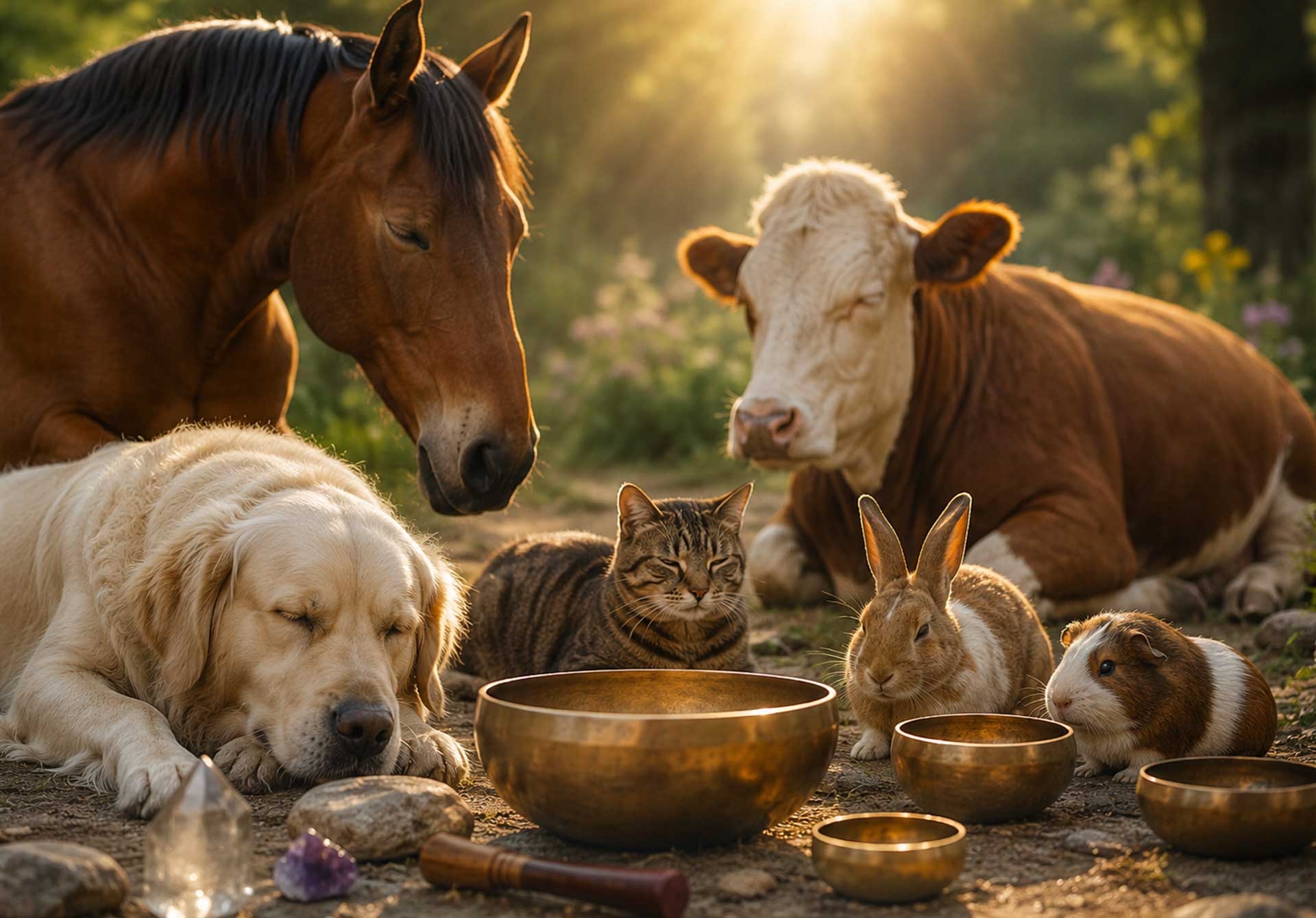
What are the benefits of sound therapy for animals?
Sound Energy Therapy uses calming tones and therapeutic vibrations to support an animal’s natural ability to heal. By working with the animal’s energy field, it helps soothe the nervous system, release tension, and create a sense of safety and peace.
Animals often respond with softer eyes, slower breathing, and a more relaxed posture as their bodies and minds begin to unwind. Sound sessions can be offered alongside veterinary care, providing an extra layer of comfort during times of illness, recovery, or transition.
Animals often respond with softer eyes, slower breathing, and a more relaxed posture as their bodies and minds begin to unwind. Sound sessions can be offered alongside veterinary care, providing an extra layer of comfort during times of illness, recovery, or transition.
- Helps animals feel calm and secure during stress or change.
- Complements traditional veterinary treatment in a non‑invasive way.
- Supports mental, emotional, physical, and spiritual balance.
Which Animals Benefit from Sound Energy Therapy?
A wide range of animals respond beautifully to sound, from family pets to larger farm companions and even wildlife in sanctuaries or natural environments. Sessions are tailored to the species, temperament, and setting so the animal always feels safe.
Whether you share your life with a nervous rescue dog, a sensitive cat, a high‑energy horse, or a recovering farm animal, sound can be adapted to meet their needs. Even wild animals may receive distant or non‑contact sound sessions from outside their enclosure or across a paddock.
Whether you share your life with a nervous rescue dog, a sensitive cat, a high‑energy horse, or a recovering farm animal, sound can be adapted to meet their needs. Even wild animals may receive distant or non‑contact sound sessions from outside their enclosure or across a paddock.
- Family pets: dogs, cats, rabbits, guinea pigs.
- Large animals: horses, ponies, cows and other farm animals.
- Wild animals: foxes, hares, birds and animals in protected spaces.
Supporting Behaviour, Emotions and Trauma
Many behaviour issues are rooted in stress, fear, trauma, or energetic imbalance rather than “badness.” Sound Energy Therapy works gently with these deeper causes, helping animals release emotional blocks and return to a more balanced state.
Over time, calming vibrations can ease patterns such as aggression, anxiety, or withdrawal, while also supporting animals who have experienced rescue trauma, neglect, or grief. As their inner tension dissolves, new behaviours based on trust and connection can emerge.
Over time, calming vibrations can ease patterns such as aggression, anxiety, or withdrawal, while also supporting animals who have experienced rescue trauma, neglect, or grief. As their inner tension dissolves, new behaviours based on trust and connection can emerge.
- Stress‑related challenges: fear, aggression, running off, excessive barking.
- Emotional issues: separation anxiety, grief, abandonment, nervousness.
- Trauma patterns: birth trauma, shock, rescue anxiety, guilt, lack of bonding.
The Human–Animal Energy Connection
A skilled Sound Energy Therapist recognises that the animal’s well‑being is closely linked to the energy of its human family and home environment. Animals often absorb emotions such as worry, sadness, or anger as an act of love, trying to lighten the load for their humans.
If the household feels tense or chaotic, pets may mirror this through nervousness, possessiveness, or disruptive behaviour. By working with both the animal and the energetic atmosphere of the home, sound therapy can help create a calmer field for everyone, strengthening bonds of trust and affection.
If the household feels tense or chaotic, pets may mirror this through nervousness, possessiveness, or disruptive behaviour. By working with both the animal and the energetic atmosphere of the home, sound therapy can help create a calmer field for everyone, strengthening bonds of trust and affection.
How Sound Sessions Are Offered Safely
Sound Energy Therapy is non‑intrusive, and sessions are designed around the animal’s comfort and safety. Larger animals may feel most at ease in their familiar surroundings, such as a stable, field, or yard, while smaller pets can be supported at home or even at the veterinary clinic.
Therapy may be delivered in the same space, at a gentle distance, or remotely, ensuring the animal is never overwhelmed. This flexibility makes sound an ideal support for sensitive or traumatised animals and those who cannot be approached directly, such as wildlife or animals in enclosures.
Therapy may be delivered in the same space, at a gentle distance, or remotely, ensuring the animal is never overwhelmed. This flexibility makes sound an ideal support for sensitive or traumatised animals and those who cannot be approached directly, such as wildlife or animals in enclosures.
- In‑person sessions in the animal’s home or natural environment.
- Distance or non‑contact sound for nervous or wild animals.
- Gentle support during veterinary visits, illness, or end‑of‑life care.
Sound healing techniques for pet anxiety relief
When introducing sound at home, it is important to respect the animal’s unique sensitivity and feedback. Begin with low volume and short sessions so your pet can choose how close to come to the sound source and how long to stay.
Watch closely for signs of comfort—relaxed posture, soft eyes, staying near the sound—as well as signals that the sound is too much, such as restlessness or moving away. Adjust tone, volume, and duration accordingly, and always seek professional veterinary or therapeutic guidance for serious health or behavioural issues.
Sound energy therapy gently calms animals, eases stress and supports natural healing, deepening trust and connection with their humans.
Combining the online Sound Energy Healing course and the Animal Energy Healing course are a perfect practical way to help enhance the happiness, health, welfare and longevity of your pet or untamed animal.
Watch closely for signs of comfort—relaxed posture, soft eyes, staying near the sound—as well as signals that the sound is too much, such as restlessness or moving away. Adjust tone, volume, and duration accordingly, and always seek professional veterinary or therapeutic guidance for serious health or behavioural issues.
- Keep volume low, gentle and soothing.
- Choose calming tones rather than sharp, intense sounds.
- Start with short sessions and extend only if your animal remains relaxed.
Sound energy therapy gently calms animals, eases stress and supports natural healing, deepening trust and connection with their humans.
Combining the online Sound Energy Healing course and the Animal Energy Healing course are a perfect practical way to help enhance the happiness, health, welfare and longevity of your pet or untamed animal.

Register Today for this World Class LEVELS 1, 2, & 3 Sound healing Online Diploma Course!